Personal
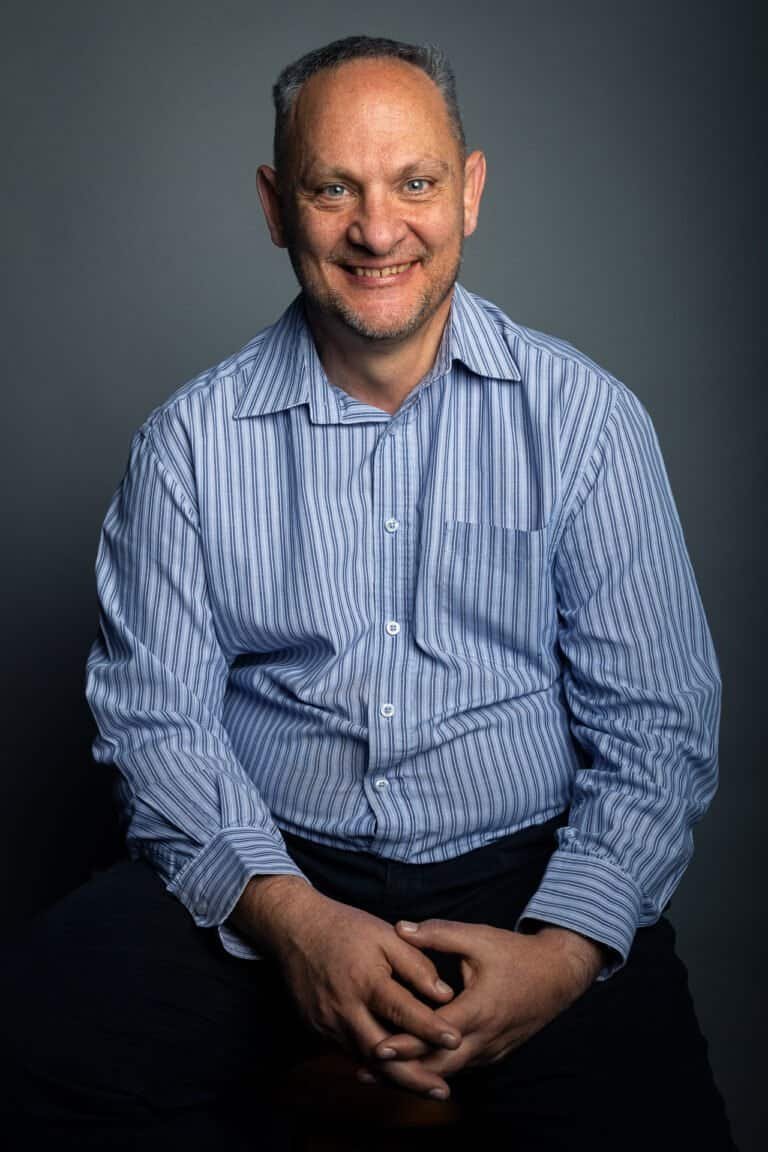
I live in Pretoria, South Africa, where I was born and raised — an Afrikaner who has spent his whole life moving between two languages and, in a strange way, two worlds. I'm the father of three, including my son Juan, who's twenty and at university, sharing my love of history and an alarming amount of trivia about dinosaurs.
Most days, you'll find me in the pool before the sun is properly up, or out on the golf course twice a week trying, with mixed success, to keep my swing honest. On a good afternoon, I'm walking the National Botanical Gardens here in Pretoria, which is where most of my best sermon ideas actually show up — usually nowhere near my desk.
I work from home, which means my study, my family, and my church life all share the same small radius. If you want to know what shapes my theology day to day, it's less the books on my shelf (though there are plenty) and more the ordinary rhythms of an ordinary life — which, I've come to believe, is exactly where most real faith actually happens.
Pastor
In October 2018, I founded Interrobang.Church in Pretoria — a non-denominational congregation built, quite literally, around tables instead of pews. We gather in a way that traces back to Acts 20:7, where the early church broke bread together on the first day of the week. Round tables. Open Bibles. Bread and wine. And because we want even the hardest questions to have a place at the table, we use an anonymous polling tool during the gathering so people can ask the things they'd never say out loud in a normal Sunday service.
The name Interrobang comes from the punctuation mark ‽ — a question mark and an exclamation point fused into one symbol. That's not just branding. It's our theology of how faith actually works. We don't think people get to wonder by skipping their questions; we think they get there by asking them honestly and following them all the way through. Our tagline says it plainly: From Question to Wonder.
Eight years in, I've learned that pastoring a small, table-centered church teaches you things that pastoring a large one never could — mostly about patience, about presence, and about how much of ministry is simply showing up, week after week, for people whose names you actually know.
Scholar
My academic path started somewhere unexpected: a degree in actuarial science from the University of Pretoria, followed by several years as an actuarial consultant. I loved the discipline of it — the insistence on rigor, on getting the numbers right because real consequences followed if you didn't. I still think that training shows up in how I do theology: carefully, and with a low tolerance for sloppy thinking dressed up as spirituality.
Eventually, the pull toward ministry and theology won out. I hold a doctorate in theology, specializing in worship and Eucharistic theology, along with two further master's degrees in theology. My academic interests sit at the intersection of liturgical and worship theology, the theology of the Eucharist, practical and congregational theology, ecclesiology, spiritual formation, and apologetics.
My thinking has been shaped over the years by a fairly consistent set of conversation partners: N.T. Wright's account of the Kingdom already breaking into the present; Dallas Willard's vision of discipleship as a genuine apprenticeship in living; Scot McKnight, Eugene Peterson, John Walton, Daniel Migliore, Miroslav Volf, Jürgen Moltmann, Leonard Sweet, C.S. Lewis, and Karl Barth, each in their own way. I don't think theology is meant to stay in the academy. I think it's meant to end up at a table, in a sermon, in a conversation with someone who's never set foot in a church.
Author
I write in both English and Afrikaans, for two different audiences that, as it turns out, are usually asking the same questions. The Good Story of All of Us makes the case that the Bible isn't a scattered collection of moral lessons but one coherent story — and that every one of us is invited to find our place inside it. The Day He Did Not Leave argues that the Ascension of Jesus isn't a story about absence; it's a story about enthronement, presence, and a King who reigns now, not someday. Why Christian‽ takes the form of an honest conversation — about the questions believers and skeptics actually ask, written without academic distance and without losing warmth.
A fourth book, Table Theology, is close behind. You can find all of them, current and forthcoming, on the Books page.